
Process Technology

At a Glance
Degree Plans
Associate of Applied Science Certificate
Earning Potential
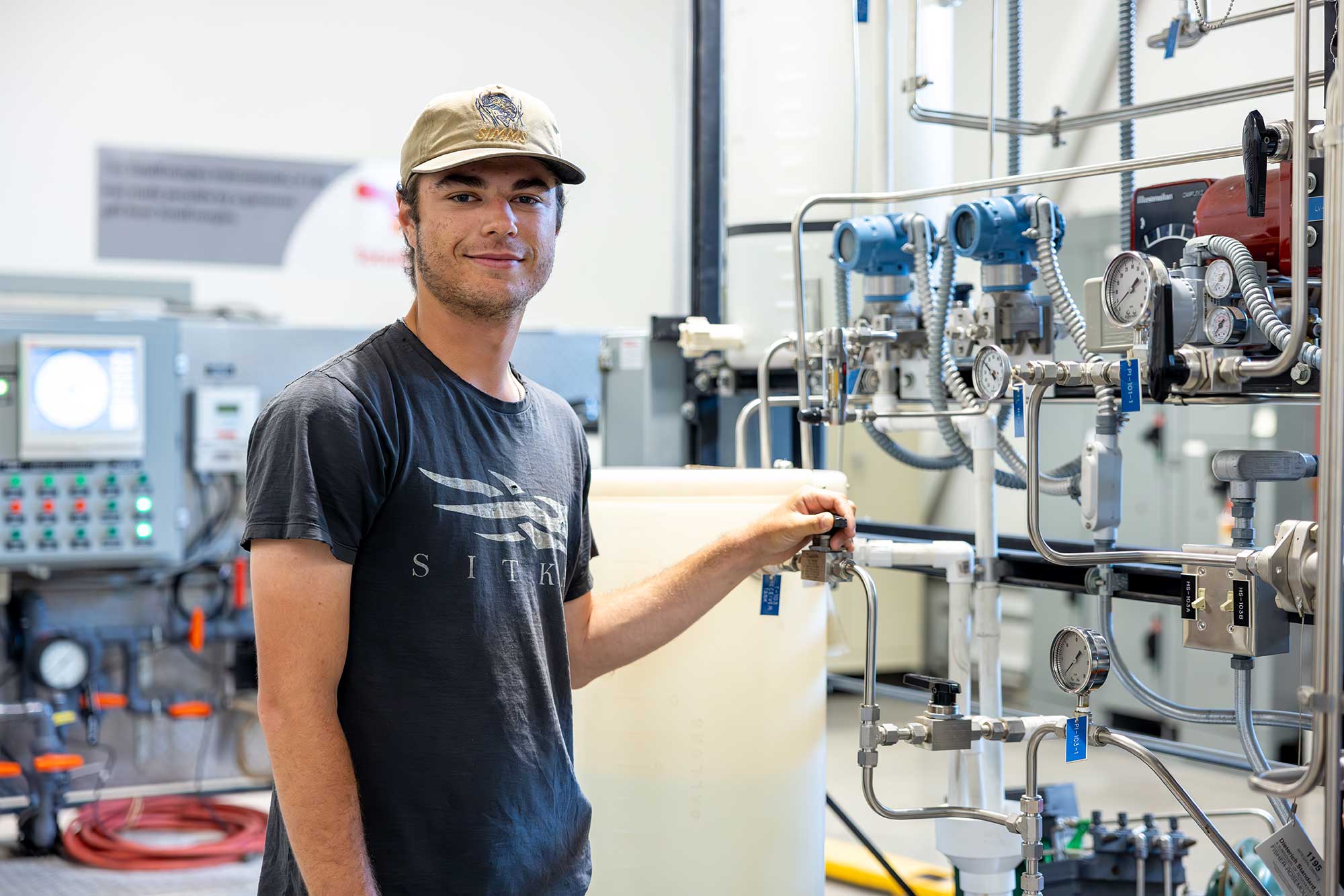
Build a rewarding career in Process Technology without leaving Southeast Texas. LSCPA's program prepares you for skilled work in one of the region's most in-demand industries through hands-on training at the most advanced industrial training facility in the area. You'll gain practical skills the local energy and refining employers recognize and respect, translating directly into better job prospects and stronger earning potential. Start your path toward a stable, fulfilling future in process operations and plant technology.
Top Careers in Process Technology
Common Roles
- Process Technician
- Plant Operator
- Process Operator
- Console Operator
- Production Technician
Typical Career Paths
Most professionals build their experience from entry-level positions before advancing into higher-paying work. Starting as an operator trainee or panel assistant opens the door to roles monitoring pumps, compressors, distillation columns, and refining systems, while strong performance can lead to console operation, troubleshooting, and supervisory work.
Salary Expectations
| Job Title | Texas Median Salary | National Median Salary | Citation |
|---|---|---|---|
| Chemical Plant & System Operators | $102,750 | $78,120 | O*NET Online Link |
| Petroleum Pump System Operators & Refinery Operators | $84,100 | $96,710 | O*NET Online Link |
Schedule a Meeting
Kenneth Ballou
Program Coordinator
UITC Room 201E
Phone: 409-984-6367
Email: ballowkw@lamarpa.edu
James Powell
Instructor
UITC Room 201D
Phone: 409-984-6344
Email: powellj@lamarpa.edu
Tom Janise
Adjunct Instructor
UITC 201A
Phone: 409-984-6418
Email: janiseth@lamarpa.edu
Justin Whitewood
Adjunct Instructor
UITC 201A
Phone: 409-984-6418
Email: whitewoodjr@lamarpa.edu
Program Information
Students are required to take the Texas Success Initiative Exam for this Program of Study.
The Business and Industrial Technology Department recommends that you apply for your certificate as soon as it is available, even if you intend to continue studying for your degree. Follow the application instructions on the Graduation page to receive your certificate.
| Course | Title | SCH |
|---|---|---|
| First Semester | ||
| PTAC 1302 | Introduction to Process Technology | 3 |
| PTAC 1408 | Safety, Health, and Environment I | 4 |
| PTAC 1410 | Process Technology I – Equipment | 4 |
| ITSC 1401 | Introduction to Computers | 4 |
| Second Semester | ||
| PTAC 1432 | Process Instrumentation I | 4 |
| PTAC 2314 | Principles of Quality | 3 |
| PTAC 2420 | Process Technology II – Systems | 4 |
| ELECTIVE | Approved College Level Mathematics | 3 |
| Third Semester | ||
| ELECTIVE | Humanities/Fine Arts | 3 |
| PTAC 2336 | Process Instrumentation II | 3 |
| SCIT 1494 | Special Topics in Chemistry | 4 |
| SPCH 1315 | Public Speaking | 3 |
| ENGL 2311 | Technical & Business Writing | 3 |
| Fourth Semester | ||
| SCIT 1418 | Applied Physics | 4 |
| PTAC 2446 | Process Troubleshooting | 4 |
| PTAC 2438 / PTAC 2487 | Process Technology III - Operations / Internship - Process Technology / Technician | 4 |
| ELECTIVE | Approved Social Behavioral Science | 3 |
| Total | 60 | |
Students are required to take the Texas Success Initiative Exam for this Program of Study.
| course | title | sch |
|---|---|---|
| First Semester | ||
| PTAC 1302 | Introduction to Process Technology | 3 |
| PTAC 1408 | Safety, Health, and Environment I | 4 |
| PTAC 1410 | Process Technology I – Equipment | 4 |
| ITSC 1401 | Introduction to Computers | 4 |
| Second Semester | ||
| PTAC 1432 | Process Instrumentation I | 4 |
| PTAC 2314 | Principles of Quality | 3 |
| PTAC 2420 | Process Technology II – Systems | 4 |
| ELECTIVE | Approved College Level Mathematics | 3 |
| Total | 29 | |
An LSCPA Process Technology credential opens the door to a long career in plant operations, refining, and industrial energy work. After finishing the program, graduates can:
- Step into the workforce ready to contribute. Graduates often begin as Process Technicians, Plant Operators, Process Operators, Console Operators, or Production Technicians — roles in steady demand at refineries, chemical plants, and energy facilities across Southeast Texas and beyond.
- Keep building on your credits. Coursework from the program may count toward additional credentials or related degrees, depending on the college and degree plan. With a marketable skills award, stackable certificates, and flexible training options, LSCPA lets you advance at the pace that fits your life.
- Continue toward a four-year degree. After earning your certificate, you can build toward an associate degree and transfer to a university to pursue a Bachelor's degree in Process Technology, Industrial Technology, Engineering, or a related field, where available.
- Grow into leadership roles. As you gain experience and earn industry credentials in process operations, safety, or instrumentation systems, doors open to positions like Console Operator, Lead Process Operator, Shift Supervisor, or Plant Operations Manager — careers that reward both skill and ambition with strong earning potential.
With these stackable credentials, you can earn a focused process technology qualification, enter the workforce, and continue advancing your skills and career on a timeline that fits your goals.
What is the Process Technology program at LSCPA?
The Process Technology program at LSCPA trains you for skilled work at refineries, chemical plants, and energy facilities throughout the region. The curriculum covers process operations, equipment monitoring, safety, and instrumentation systems, along with the hands-on skills needed to run pumps, compressors, and distillation columns. Built around the skills employers actually use, it gives you the practical, job-ready knowledge that Southeast Texas energy and refining employers value.
What certifications or credentials can I earn through the Process Technology program?
Once you complete the Process Technology program, you can earn a marketable skills award and a certificate. Beyond your certificate, you can pursue industry credentials in areas like process operations, plant safety, or instrumentation systems — credentials that expand your career options and boost your earning potential.
What kind of jobs can I get with Process Technology training?
This training opens doors at refineries, chemical plants, gas processing facilities, and energy plants throughout the region. Graduates step into roles such as Process Technician, Plant Operator, Process Operator, Console Operator, Production Technician, or Chemical Plant and System Operator.
Is the Process Technology program flexible for working adults?
Absolutely. The Process Technology program offers flexible scheduling built around the demands of work and family, so commuters and working adults can pursue their training without putting life on hold. An advisor can help you map out a schedule that fits your goals.
How long does it take to complete the Process Technology program?
You can finish the Process Technology program on a timeline that suits you. A certificate takes less time than a full degree, while a marketable skills award can be earned even faster. Enrolling in summer terms or earning advanced placement can shorten that path. An advisor will help you choose the schedule that fits your goals.
What is the salary potential for a Process Technology professional?
Pay in process technology reflects both your role and your experience. Drawing on Texas Workforce Commission and federal wage data, chemical plant and system operators earn $87,660–$100,980 a year, while petroleum pump system and refinery operators earn around $87,660. Entry-level workers usually start near the lower end of these ranges, though experienced professionals command considerably higher pay. With added certifications and experience, graduates can move into roles like chemical equipment operator, earning about $72,100. Your earnings will depend on where you work, how much experience you bring, and the position you hold. Because demand stays strong, added experience and credentials can move you into well-paid leadership roles down the road.
What is the Process Technology program at LSCPA?
The Process Technology program at LSCPA trains you for skilled work at refineries, chemical plants, and energy facilities throughout the region. The curriculum covers process operations, equipment monitoring, safety, and instrumentation systems, along with the hands-on skills needed to run pumps, compressors, and distillation columns. Built around the skills employers actually use, it gives you the practical, job-ready knowledge that Southeast Texas energy and refining employers value.
What certifications or credentials can I earn through the Process Technology program?
Once you complete the Process Technology program, you can earn a marketable skills award and a certificate. Beyond your certificate, you can pursue industry credentials in areas like process operations, plant safety, or instrumentation systems — credentials that expand your career options and boost your earning potential.
What kind of jobs can I get with Process Technology training?
This training opens doors at refineries, chemical plants, gas processing facilities, and energy plants throughout the region. Graduates step into roles such as Process Technician, Plant Operator, Process Operator, Console Operator, Production Technician, or Chemical Plant and System Operator.
Is the Process Technology program flexible for working adults?
Absolutely. The Process Technology program offers flexible scheduling built around the demands of work and family, so commuters and working adults can pursue their training without putting life on hold. An advisor can help you map out a schedule that fits your goals.
How long does it take to complete the Process Technology program?
You can finish the Process Technology program on a timeline that suits you. A certificate takes less time than a full degree, while a marketable skills award can be earned even faster. Enrolling in summer terms or earning advanced placement can shorten that path. An advisor will help you choose the schedule that fits your goals.
What is the salary potential for a Process Technology professional?
Pay in process technology reflects both your role and your experience. Drawing on Texas Workforce Commission and federal wage data, chemical plant and system operators earn $87,660–$100,980 a year, while petroleum pump system and refinery operators earn around $87,660. Entry-level workers usually start near the lower end of these ranges, though experienced professionals command considerably higher pay. With added certifications and experience, graduates can move into roles like chemical equipment operator, earning about $72,100. Your earnings will depend on where you work, how much experience you bring, and the position you hold. Because demand stays strong, added experience and credentials can move you into well-paid leadership roles down the road.
The LSCPA Advantage
Skills That Support Growth
Your training in process operations, equipment monitoring, safety, and instrumentation gives you the hands-on foundation to grow into a rewarding career in the field.
Education That Works
Our Process Technology program connects you to in-demand careers across Southeast Texas. You'll work hands-on with process operations, equipment monitoring, and instrumentation systems, sharpen your safety and problem-solving skills, and master what matters to local employers — running pumps, compressors, and distillation columns with confidence and a firm grasp of how plant systems run.
The Focus is You
Small class sizes, experienced instructors, and the most advanced industrial training facility in the region come together to launch your career, all at a price that won't hold you back.
Request Information
At a Glance
Degree Plans
Associate of Applied Science Certificate